
research driven literacy
From First Sounds to Fluent Writers
Explore our literacy program to discover where your child is on their journey—and how targeted, multisensory support can unlock their full potential.
mechanics of literacy
Why Readers & Writers Get Stuck
When children struggle to get thoughts onto paper, stumble over unfamiliar or complex words, or spend hours studying spelling words only to forget them days later, it is not a reflection of their potential or their desire to learn.
Cognitive science shows that reading, spelling, and written expression all rely on shared, overlapping neural pathways (Rapp & Lipka, 2011). When word-pattern connections or handwriting mechanics aren’t yet automatic, a child’s brain exhausts its limited working memory capacity just processing individual words—leaving little to no cognitive space for higher-order expression, fluency, vocabulary, or comprehension (Sweller et al., 2019; Perfetti & Stafura, 2014).
References
Rapp, B., & Lipka, K. (2011). The literate brain: The relationship between spelling and reading. Journal of Cognitive Neuroscience, 23(5), 1180–1197.
Perfetti, C., & Stafura, J. (2014). Word knowledge in a theory of reading comprehension (Verbal Efficiency Theory framework). Scientific Studies of Reading, 18(1), 22–37.
Sweller, J., van Merriënboer, J. J., & Paas, F. (2019). Cognitive load theory: Methods to manage working memory load in instruction. Educational Psychology Review, 31(2), 261–292.

Unsure where your child’s literacy breakdown is occurring?
Grounded in the Science of Reading
Our 5 Core Pillars
By replacing guesswork with explicit code-breaking, simultaneous multisensory mechanics, orthographic mapping, oral language expansion, and structured writing strategies, our five core pillars build automatic word-level mechanics—unlocking your child’s working memory to focus on fluent expression, deep comprehension, and independent writing confidence.

01
Phonemic Awareness & Explicit Phonics
The Ontario Human Rights Commission’s Right to Read inquiry report confirms that direct, systematic, explicit instruction in phonemic awareness, grapheme-phoneme mapping, and word-reading mechanics is an essential, evidence-based requirement for all elementary students—providing the blueprint to eliminate guessing habits and visual memorization (OHRC, 2022; National Reading Panel, 2000).
We skip the guesswork and teach the English code step-by-step. Using hands-on sound boards, explicit letter-sound modeling, decodable text practice, and structured word analysis, students learn exactly how to segment spoken sounds, blend graphemes, and break down unfamiliar words with complete clarity.
02
Multisensory Kinesthetics
Cognitive research demonstrates that simultaneously engaging visual, auditory, and kinesthetic-motor pathways (VAK) during phoneme-grapheme instruction creates stronger, more accessible neural connections—accelerating memory retention and building automaticity for all learning styles (Rapp & Lipka, 2011; Sweller et al., 2019).
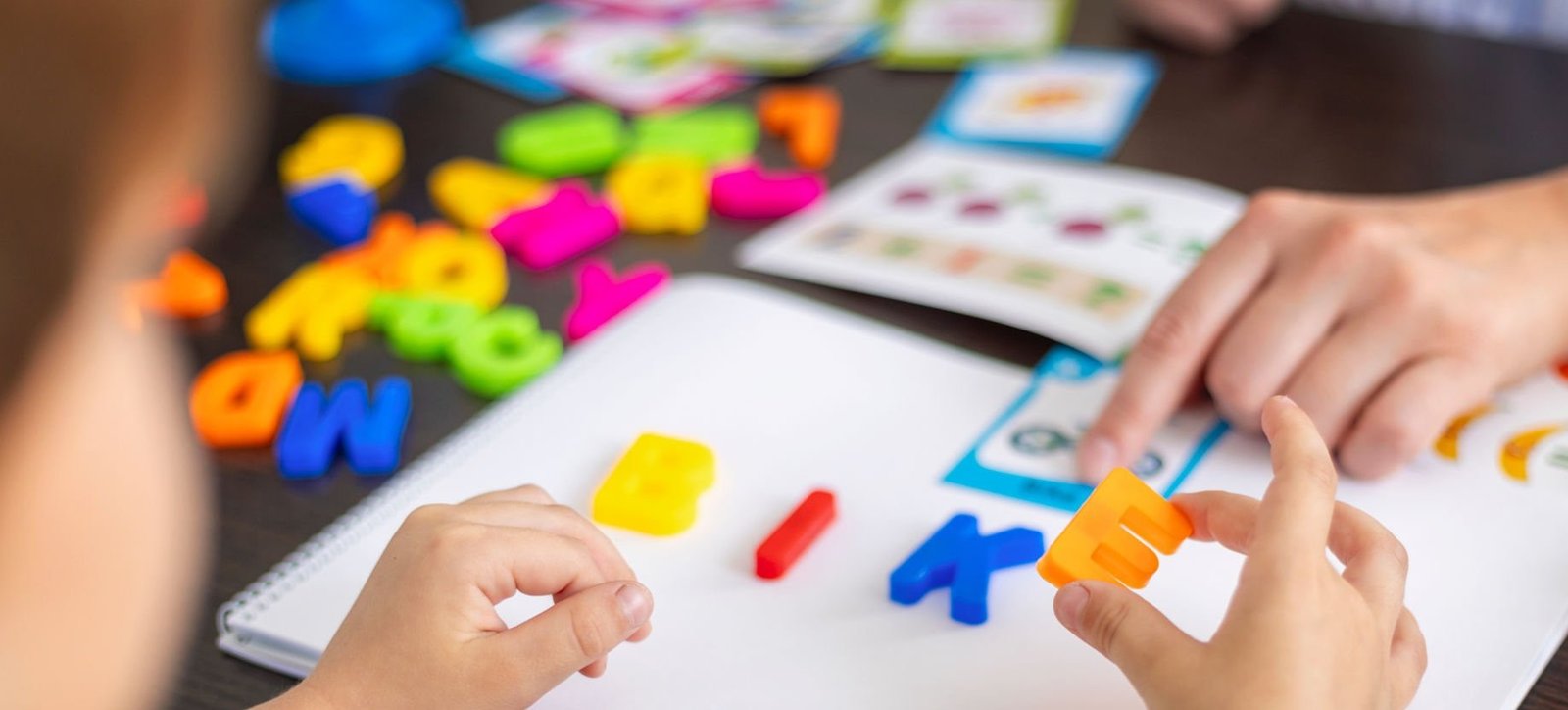
We bring learning off the page through purposeful, simultaneous multisensory channels. Students engage visual, auditory, tactile, and kinesthetic pathways through tactile letter formation, hands-on grapheme manipulation, phoneme tapping, and spatial syllable mapping—building muscle memory that makes word recognition and spelling automatic.

03
Orthographic Mapping & Reading Fluency
Neurological studies confirm that orthographic mapping—the cognitive process of permanently bonding speech sounds to letter sequences in memory—is the exact mechanism that converts unfamiliar words into instantly recognized sight words, freeing critical working memory capacity (Kilpatrick, 2015; Share, 1995).
We move students beyond laborious sounding-out into rapid, automatic word recognition. Through targeted sound-symbol connection routines, pattern analysis, and decodable text re-reading, we ensure words become permanently stored in long-term memory so reading becomes smooth, effortless, and expressive.
04
Integrated Decoding & Encoding
Cognitive research demonstrates that reading (decoding) and writing (encoding) draw on shared, overlapping mental representations of language. Every breakthrough in word recognition directly accelerates confidence and precision in written spelling and sentence construction (Perfetti & Stafura, 2014; Rapp & Lipka, 2011).
We connect reading and writing seamlessly in every session. As students master new phonic patterns, syllable structures, and morphological roots, they immediately apply them through targeted dictation, multisensory spelling routines, and structured sentence building.

05
Language Structures, Vocabulary & Meaning-Making
Grounded in the Simple View of Reading and Scarborough’s Reading Rope, research shows that reading comprehension is the direct product of word recognition and language comprehension. Explicitly expanding vocabulary, complex syntax, morphology, and background knowledge enables students to construct rich mental models of complex texts (Gough & Tunmer, 1986; Scarborough, 2001).
We treat comprehension as the ultimate destination of literacy, not a standalone worksheet exercise. Once word-level mechanics are secure, we systematically expand oral language, academic vocabulary, sentence structures, and domain knowledge—ensuring students move from basic word reading to deep, analytical text comprehension.
References
Gough, P. B., & Tunmer, W. E. (1986). Decoding, reading, and reading disability. Remedial and Special Education, 7(1), 6–10.
Kilpatrick, D. A. (2015). Equipped for Reading Success: A Comprehensive, Step-by-Step Program for Developing Phonemic Awareness and Fluent Reading. Casey & Kirsch Publishers.
National Reading Panel. (2000). Teaching children to read: An evidence-based assessment of the scientific research literature on reading and its implications for reading instruction (NIH Publication No. 00-4712). Washington, DC: U.S. Government Printing Office.
Ontario Human Rights Commission. (2022). Right to Read: Inquiry report on human rights issues affecting students with reading disabilities. Toronto, ON: Queen’s Printer for Ontario.
Perfetti, C., & Stafura, J. (2014). Word knowledge in a theory of reading comprehension (Verbal Efficiency Theory framework). Scientific Studies of Reading, 18(1), 22–37.
Rapp, B., & Lipka, K. (2011). The literate brain: The relationship between spelling and reading. Journal of Cognitive Neuroscience, 23(5), 1180–1197.
Scarborough, H. S. (2001). Connecting early language and literacy to later reading (dis)abilities: Evidence, theory, and practice. In S. Neuman & D. Dickinson (Eds.), Handbook of Early Literacy Research (pp. 97–110). Guilford Press.
Share, D. L. (1995). Phonological recoding and self-teaching: Sine qua non of reading acquisition. Cognition, 55(2), 151–218.
Sweller, J., van Merriënboer, J. J., & Paas, F. (2019). Cognitive load theory: Methods to manage working memory load in instruction. Educational Psychology Review, 31(2), 261–292.
Ready to replace guesswork with structured literacy?
The mindbuilders Roadmap
Our 9-Tier Literacy Roadmap
Our mastery-based 9-Tier Roadmap systematically builds skills from foundational sound mapping through written analysis, advancing students strictly by diagnostic mastery to permanently close learning gaps regardless of age or grade.
Tier 1

Foundational Phonemic Awareness
Isolating, blending, and manipulating individual speech sounds orally and kinesthetically to build essential neural pathways for print.
Tier 2

Single-Consonant & Short Vowels
Establishing automatic sound-symbol mapping in closed (CVC) patterns through tactile tools and immediate dictation.
Tier 3

Consonant Blends & Digraphs
Systematically reading and spelling initial/final consonant clusters and digraphs (ch, sh, th, wh) without dropping sounds.
Tier 4

Syllable Architecture & Vowel Teams
Unlocking all six English syllable structures and core vowel patterns to make multisyllabic decoding predictable and fluent.
Tier 5

Multisyllabic Structural Analysis
Dividing and decoding complex words by identifying syllable boundaries, stress patterns, and schwa sounds without cognitive overload.
Tier 6

Introductory Morphology & Affixes
Unpacking base words, common prefixes, and suffixes (un-, re-, -ed, -able), and silent letters to simultaneously expand vocabulary and spelling accuracy.
Tier 7

Latin & Greek Morphemic Roots
Analyzing high-level academic roots (e.g., struct, tract, bio, graph) to decode and comprehend advanced content-area vocabulary.
Tier 8

Integrated Fluency & Sentence Mechanics
Investigate advanced spelling generalizations, complex multisyllabic fluency, prosody, and structured sentence construction.
Tier 9

Expressive Composition & Text Analysis
Synthesizing automatic decoding and structural encoding to independently analyze complex texts and compose structured, multi-paragraph writing.
Discover your child’s exact entry point on our 9-Tier Roadmap.
how it works
Our Intervention Process
From initial diagnostic placement to ongoing mastery tracking and family updates, our structured workflow ensures a seamless, transparent experience. Every step is designed to deliver targeted, high-impact instruction tailored strictly to your child’s exact skill level.
01

Our Diagnostic Assessment
Before instruction begins, we conduct a comprehensive diagnostic assessment to evaluate every layer of your child’s literacy profile—including phonemic awareness, decoding automaticity, syllable division, and writing syntax. This granular evaluation identifies specific strengths and instructional needs to pinpoint their exact entry point on our 9-Tier Roadmap.
02
The Learning Plan
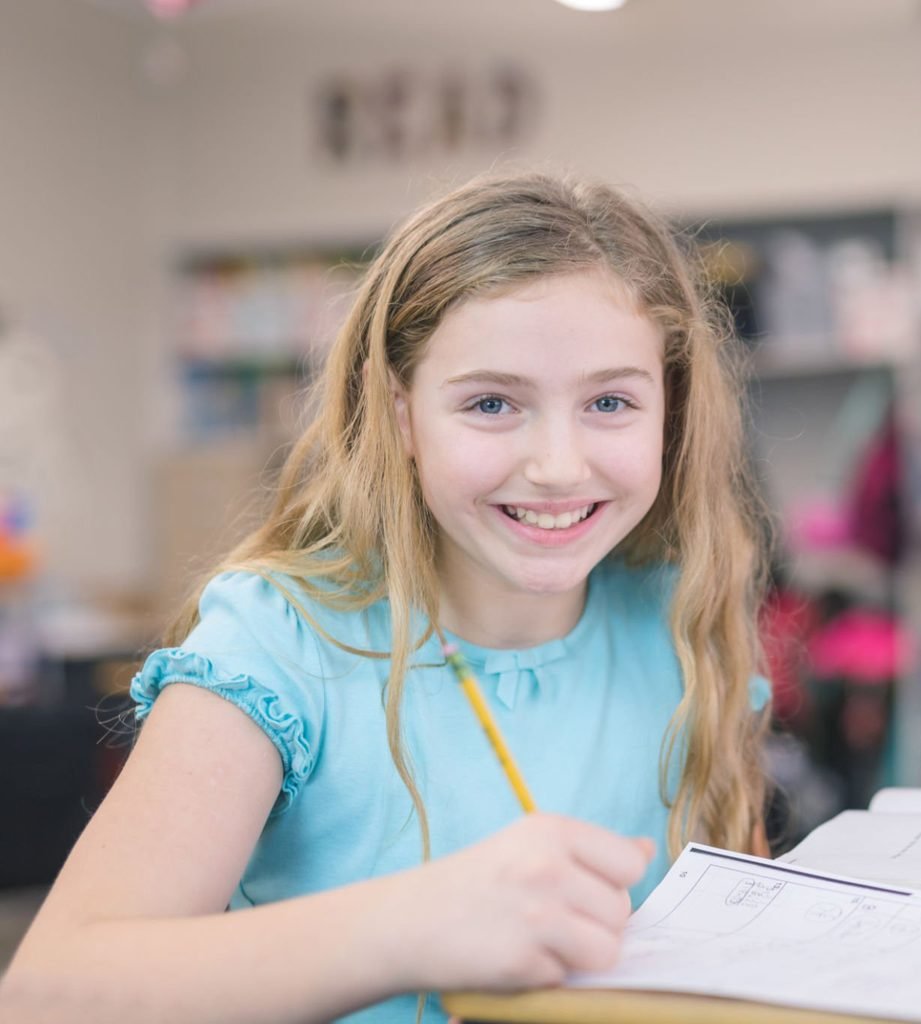
Following the diagnostic assessment, we align your child’s specific literacy profile with the appropriate entry point on our 9-Tier Roadmap. This custom roadmap placement eliminates redundant practice and focuses entirely on the foundational skills needed for their next level of achievement.
03
Explicit, Multi-Sensory Direct Instruction
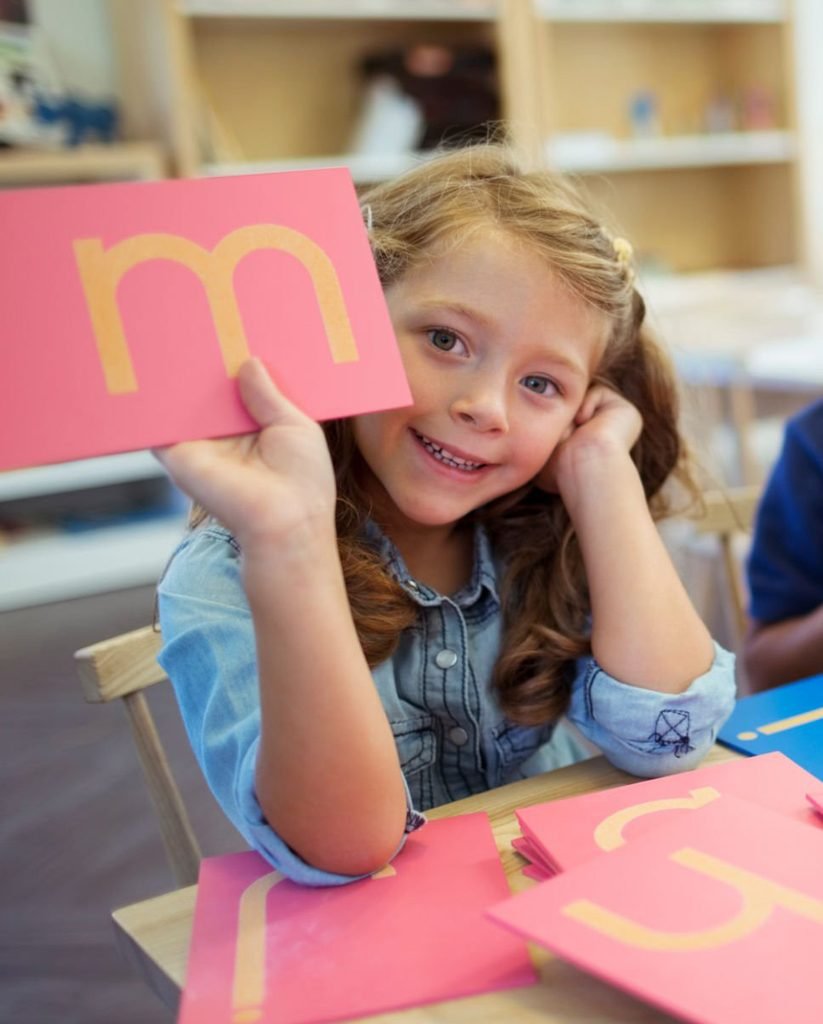
Once placed on the Roadmap, intervention sessions deliver systematic, structured literacy instruction designed to make complex language patterns intuitive and automatic. By simultaneously engaging visual, auditory, and kinesthetic channels, we build lasting skill mastery at every level.
04

Continuous Mastery Tracking & Data-Driven Progression
Advancement across our 9-Tier Roadmap is strictly mastery-based, tracking accuracy and automaticity during every session. We ensure foundational skills are permanently solidified before introducing higher-level decoding, morphology, or complex writing demands.
05

Progress Updates & Academic Bridge
Families receive clear, objective progress updates detailing specific skills mastered and roadmap placement. We equip you with simple strategies and direct feedback to support your child’s growing confidence at home. This transparent communication keeps you fully informed and empowered as your child advances.
Take the First Step Toward Independent Literacy
Schedule a diagnostic discovery session to receive a custom roadmap for your child.
Get in Touch
Contact Us

Phone
Mon–Fri 9:00 a.m. – 3:00 p.m.

We reply within 24 hours
